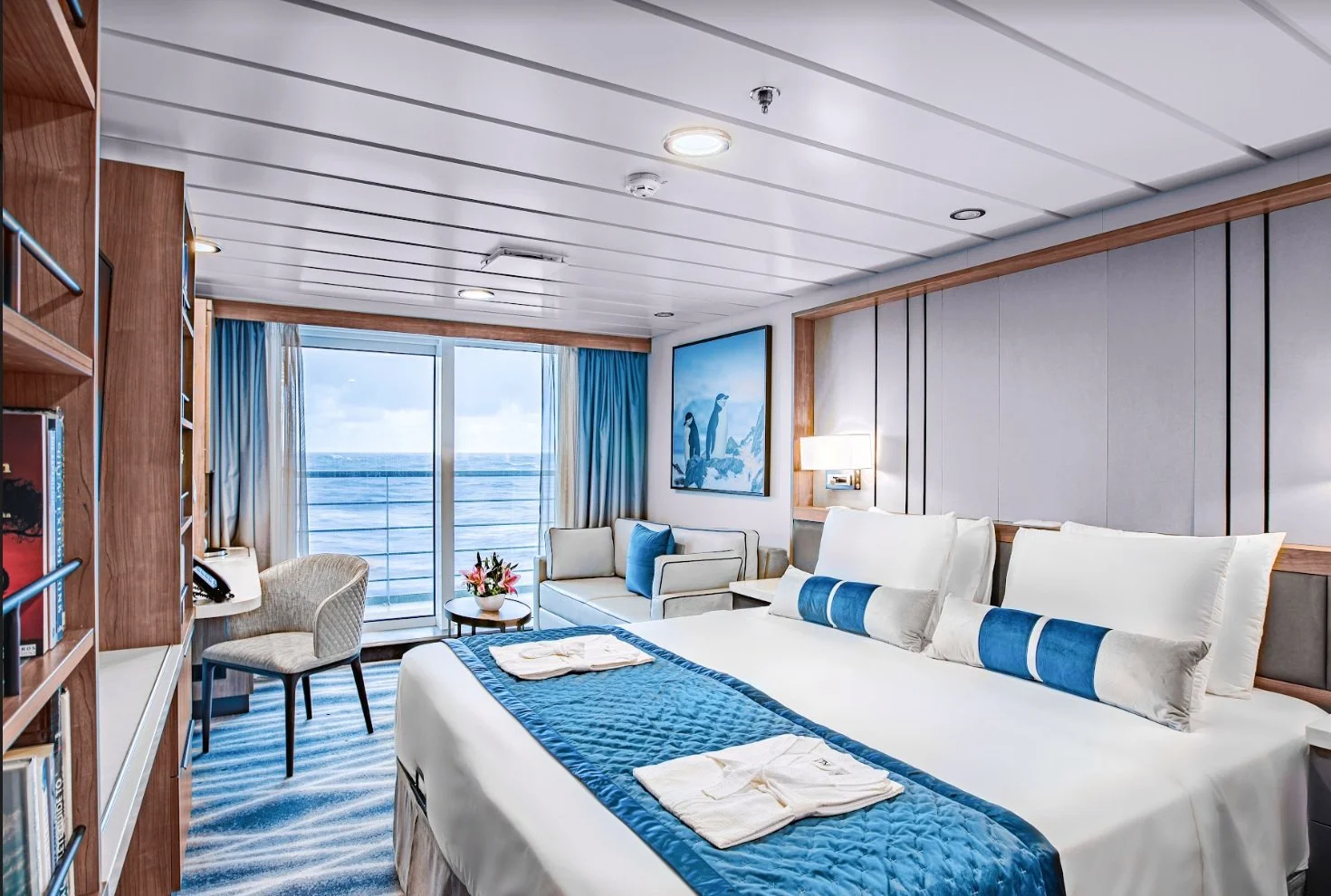
Ocean Victory — a balcony cabin photographed during her inaugural season.
I worked in sales at a hotel, so when I photograph a hotel I am thinking about the conversation that happens before somebody books. What are they asking? What are they unsure about? What do they need to see before the price makes sense?
That is why I find it frustrating when photography is judged entirely on the cost of the shoot. The images will be used to sell the property, often for years. The quote deserves to be considered alongside the work those photographs need to do.
Show what the premium buys
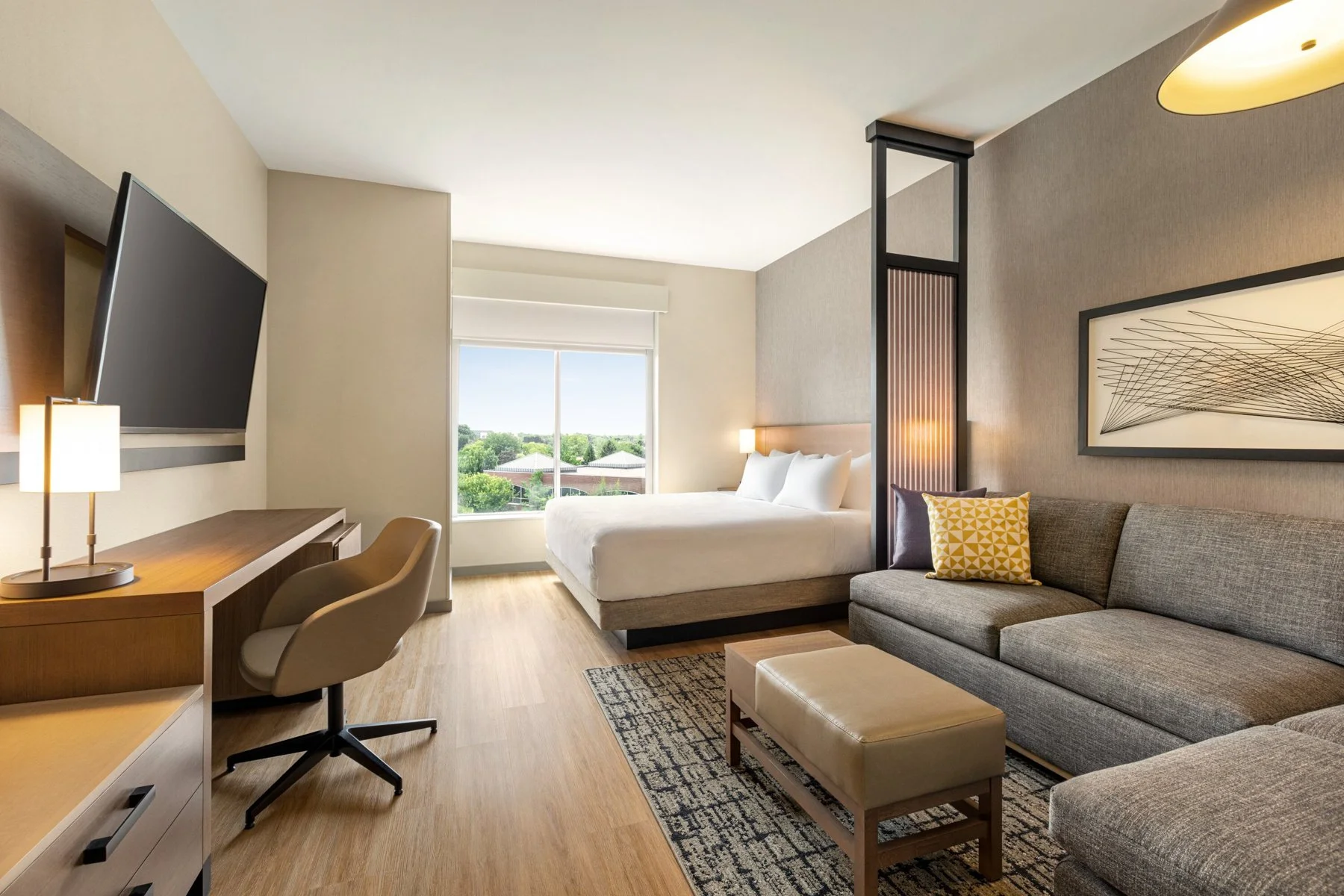
Suppose your room costs $50 more than a comparable option. That difference is much easier to explain when the guest can see what comes with it: a proper seating area, more space around the bed, a view, different furnishings or a bathroom worth spending time in.
I start by making the layout clear. A room photograph needs to explain the geometry of the space and the relationship between its parts. Then I move closer to the details: the bedside light, the bedding, the chair beside the window. Those photographs give the guest a more complete picture of the room they are considering.
This matters for room-category merchandising too. If the differences between categories support your rate structure, they need to be visible in the photographs. A guest should be able to compare the rooms without having to ask the reservations team to describe everything that distinguishes them.
The cabin conversation
My expedition work gives me another perspective on this. I have heard returning guests say they were happy to choose a smaller cabin because, in their words, “We only ever slept there.” There is so much happening outside the cabin that their priorities change once they know the experience.
Before the first voyage, though, the cabin is something tangible to compare. A travel agent needs photographs to explain the options to someone committing a considerable amount of money and time.
I photographed Ocean Victory's interiors during her inaugural season, while we repositioned across the Pacific towards Ushuaia. Those pictures had a practical job: help someone understand accommodation they could not visit before booking. Clear photographs can explain the space in ways a floor plan leaves to the imagination.
Hotels face that same distance between the experience on offer and what a prospective guest can know about it online.
Start with the people selling the rooms
I want to talk to the hotel team before we build the shot list. Who books now? Who would you like to attract? What does the comp set offer? Where does the sales conversation get stuck?
The answers affect the photographs. A room-category comparison needs consistency. A group proposal may need public spaces and dining options. A property selling its setting needs views that explain its relationship to the destination.
ADR and RevPAR belong in that discussion because they explain the commercial priorities. Photography can help the team present a premium and give buyers reasons to choose the property. It is worth asking whether the current library gives sales and marketing the material they need to do that.
I see photography as part of the investment in the guest experience, alongside housekeeping, F&B and the people welcoming guests at check-in. For many prospective guests, the photographs are their first encounter with that experience.
Before commissioning a shoot, look at your existing gallery and ask what it leaves unexplained. That is a useful place for us to start.
View my hotel interiors portfolio, or tell me about the property and the work your photographs need to do.
Andrew Miller is a Toronto-based hospitality photographer with a background in hotel sales. About Andrew.
Hotel images accompanying this article: photography by Andrew Miller / Capture North Studios, for VRX / Connelly Partners.